Platform comparison
| Platform | YES odds | NO odds | Fee | KYC | Settlement | |
|---|---|---|---|---|---|---|
Polymarket (via Is Kalshi Legal in California) Pick polygram.ink (preferred broker) |
8% | 92% | 0% (USDC on-chain) | No-KYC up to $1,500 | USDC, auto via UMA oracle | Go to the live market → |
Polymarket (direct) polymarket.com |
8% | 92% | 0% | Geo-blocked in US/UK/EU | USDC, on-chain | Go to the live market → |
Kalshi kalshi.com |
— | — | Up to 7% per trade | US-only, KYC required | USD | Go to the live market → |
Betfair Exchange betfair.com |
— | — | 2-5% commission | Full KYC from first trade | GBP / EUR | Go to the live market → |
Manifold Markets manifold.markets |
— | — | Play-money (mana) | None — play-money | Mana (no cash-out) | Go to the live market → |
Market context
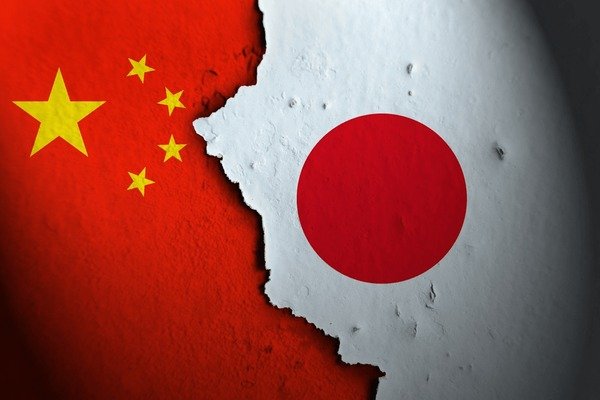
Direct force between Chinese and Japanese military units remains the core event, defined as missile strikes, artillery fire, or gunfire exchanges, rather than diplomatic spats or economic sanctions. Current tensions have escalated sharply since mid-2026, with China imposing export controls on 40 Japanese firms over dual-use items and detaining two Japanese businessmen, while Chinese and Russian bombers conducted flights near Japan’s southwestern region[1][2]. Historical precedents like the 2014 Senkaku/Diaoyu island standoff and the 2019 radar incident show that friction often peaks around Taiwan-related rhetoric, yet actual combat has never occurred despite decades of proximity[2][3]. The 8% crowd-implied probability reflects this pattern: high tension without direct violence, as non-violent actions like warning shots or uninhabited-area artillery do not trigger settlement[1].
Traders should monitor three catalysts: Prime Minister Sanae Takaichi’s statements on Taiwan’s existential threat to Japan, routine Chinese military exercises near the Senkaku islands, and US responses to radar incidents involving Japanese aircraft[2][4]. A recent US condemnation of China directing radars at Japanese military planes marks a shift in diplomatic backing, potentially increasing escalation risks if China retaliates militarily[4]. The settlement window closes on 31 December 2026, so any announcement of new Chinese operating behaviors around disputed features or larger-scale exercises in the East China Sea would be critical[3].
Regulatory access hinges on German GlüStV implications for EU users, US CFTC reach for American traders, and the platform’s ‘no-KYC up to $1,500’ threshold, which allows immediate participation without identity verification for this specific market[1]. This structure enhances accessibility for retail traders but does not alter the underlying event’s factual triggers. The market resolves to ‘Yes’ only if direct force occurs between 17 November 2025 and 31 December 2026, excluding non-violent warnings or launches into uninhabited zones[1].
Methodology
This overview of China x Japan military clash before 2027? reviews the four comparable platforms from a regulatory perspective: which is accessible in your jurisdiction, where KYC kicks in, how the platform is classified by your country of residence. Live probability is the Polymarket mid; comparison columns show regulatory status, KYC thresholds and settlement options for each platform.
Resolution & payout
On Polymarket, resolution runs on-chain via UMA Optimistic Oracle. USDC payout is instant and automatic, with no KYC. Tax treatment depends on your jurisdiction — in the US, gains are usually ordinary income; in the UK, often capital gains. Consult a tax professional for your situation.
FAQ
- Do I need to KYC for Is Kalshi Legal in California?
- Not for lifetime trading volume under $1,500. Above that threshold, a quick KYC flow kicks in — ID, selfie, approximately 5-10 minutes. The threshold matches FATF travel standards for unregulated crypto platforms.
- How are winnings taxed?
- Tax treatment varies by jurisdiction. In most countries, prediction market gains are treated as ordinary income or capital gains. We cannot provide tax advice — consult a tax professional for your specific situation.
- Can I trade anonymously?
- Pseudonymously, yes — up to the KYC threshold. Is Kalshi Legal in California stores an email address and wallet addresses rather than a legal name. Over $1,500 lifetime volume triggers KYC, after which identity is no longer anonymous.
- What happens during a tax audit?
- You're responsible for documenting your trades. Is Kalshi Legal in California exports a full transaction history (CSV/PDF) for tax reporting. In an audit you'll need to present these documents.
- What if regulation changes?
- If regulation changes in your jurisdiction (e.g. prediction markets are banned), Is Kalshi Legal in California would geo-block the affected region and continue processing withdrawals. Your funds remain withdrawable at any time.
%22%2F%3E%3Cpath%20d%3D%22M%206%2066%20A%2026%2026%200%200%201%2058%2066%22%20fill%3D%22%23E6B98D%22%20opacity%3D%220.9%22%2F%3E%3Ccircle%20cx%3D%2232%22%20cy%3D%2226%22%20r%3D%2222%22%20fill%3D%22%23F5CBA7%22%2F%3E%3Crect%20x%3D%2214%22%20y%3D%224%22%20width%3D%2236%22%20height%3D%228%22%20rx%3D%224%22%20fill%3D%22%237c3aed%22%2F%3E%3C%2Fsvg%3E) and
and%22%2F%3E%3Cpath%20d%3D%22M%206%2066%20A%2026%2026%200%200%201%2058%2066%22%20fill%3D%22%23E6B98D%22%20opacity%3D%220.9%22%2F%3E%3Ccircle%20cx%3D%2232%22%20cy%3D%2226%22%20r%3D%2222%22%20fill%3D%22%23F5CBA7%22%2F%3E%3Crect%20x%3D%2210%22%20y%3D%224%22%20width%3D%2244%22%20height%3D%2214%22%20rx%3D%227%22%20fill%3D%22%237c3aed%22%20opacity%3D%220.9%22%2F%3E%3Crect%20x%3D%228%22%20%20y%3D%2218%22%20width%3D%228%22%20%20height%3D%2218%22%20rx%3D%224%22%20fill%3D%22%237c3aed%22%20opacity%3D%220.7%22%2F%3E%3Crect%20x%3D%2248%22%20y%3D%2218%22%20width%3D%228%22%20%20height%3D%2218%22%20rx%3D%224%22%20fill%3D%22%237c3aed%22%20opacity%3D%220.7%22%2F%3E%3C%2Fsvg%3E)
Trade China x Japan military clash before 2027? on Is Kalshi Legal in California
Live order book, 0% fees, USDC settlement in seconds.
Open live market →