Platform comparison
| Platform | YES odds | NO odds | Fee | KYC | Settlement | |
|---|---|---|---|---|---|---|
Polymarket (via Is Kalshi Legal in California) Pick polygram.ink (preferred broker) |
36% | 64% | 0% (USDC on-chain) | No-KYC up to $1,500 | USDC, auto via UMA oracle | Go to the live market → |
Polymarket (direct) polymarket.com |
36% | 64% | 0% | Geo-blocked in US/UK/EU | USDC, on-chain | Go to the live market → |
Kalshi kalshi.com |
— | — | Up to 7% per trade | US-only, KYC required | USD | Go to the live market → |
Betfair Exchange betfair.com |
— | — | 2-5% commission | Full KYC from first trade | GBP / EUR | Go to the live market → |
Manifold Markets manifold.markets |
— | — | Play-money (mana) | None — play-money | Mana (no cash-out) | Go to the live market → |
Outcome probabilities
Current market-implied probability for each outcome, from the live order book.
| Outcome | Probability |
|---|---|
| December 31 | 36% |
| August 31 | 27% |
| July 31 | 19% |
| July 17 | 9% |
Market context
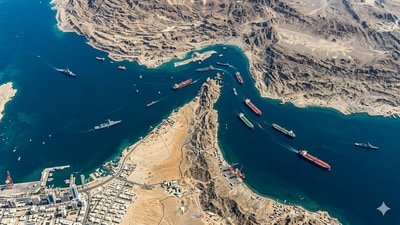
The United States has never formally instituted transit fees or tolls for passage through the Strait of Hormuz, despite controlling significant naval assets in the region. The question turns on whether the US government will establish and collect such charges—whether direct levies on shipping, reimbursement schemes from allied governments, or in-kind arrangements tied to cargo or petroleum flows—by the end of 2026. The 11% implied probability reflects scepticism that such a policy will materialise within the settlement window, though geopolitical tensions and shipping disruptions have periodically revived discussion of cost-recovery mechanisms.
Historical precedent offers limited guidance. The US has collected port fees and harbour dues at its own ports for decades, but these are distinct from transit tolls on international waterways. The Panama Canal Authority charges all vessels transiting the canal regardless of flag; however, the Strait of Hormuz remains international waters under the UN Convention on the Law of the Sea, making unilateral toll collection legally contentious. Previous US administrations have rejected formal tolls, instead funding naval operations through congressional appropriations. Recent statements from Trump administration officials in 2024–2025 have signalled openness to cost-sharing arrangements with Gulf allies, though no concrete fee structure has been announced.
Traders should monitor announcements from the US State Department, Department of Defence, and Treasury regarding any formal agreements with regional partners or shipping consortiums. Congressional budget debates and statements from the US Central Command will signal whether cost-recovery proposals gain traction. The settlement hinges on whether any payment—however small or structured—is actually collected and documented as a fee or toll rather than existing military aid or commercial transaction. Regulatory filings with the CFTC and compliance frameworks under German GlüStV do not affect this market's underlying resolution criteria, though traders in restricted jurisdictions should verify accessibility before participating.
Methodology
This overview of US charges Hormuz fees by 2026? reviews the four comparable platforms from a regulatory perspective: which is accessible in your jurisdiction, where KYC kicks in, how the platform is classified by your country of residence. Live probability is the Polymarket mid; comparison columns show regulatory status, KYC thresholds and settlement options for each platform.
Resolution & payout
On Polymarket, resolution runs on-chain via UMA Optimistic Oracle. USDC payout is instant and automatic, with no KYC. Tax treatment depends on your jurisdiction — in the US, gains are usually ordinary income; in the UK, often capital gains. Consult a tax professional for your situation.
FAQ
- Do I need to KYC for Is Kalshi Legal in California?
- Not for lifetime trading volume under $1,500. Above that threshold, a quick KYC flow kicks in — ID, selfie, approximately 5-10 minutes. The threshold matches FATF travel standards for unregulated crypto platforms.
- How are winnings taxed?
- Tax treatment varies by jurisdiction. In most countries, prediction market gains are treated as ordinary income or capital gains. We cannot provide tax advice — consult a tax professional for your specific situation.
- Can I trade anonymously?
- Pseudonymously, yes — up to the KYC threshold. Is Kalshi Legal in California stores an email address and wallet addresses rather than a legal name. Over $1,500 lifetime volume triggers KYC, after which identity is no longer anonymous.
- Are prediction markets gambling?
- Legally unclear in most jurisdictions. Some interpretations classify them as wagering (gambling regulation applies), others as derivatives (financial regulation applies). There's no global precedent specifically for on-chain prediction markets.
- Is there a withdrawal cap?
- No platform-side cap. You can withdraw any amount provided KYC is complete. SEPA bank withdrawals over €15,000 trigger additional anti-money-laundering checks (statutory obligation for all platforms).
%22%2F%3E%3Cpath%20d%3D%22M%206%2066%20A%2026%2026%200%200%201%2058%2066%22%20fill%3D%22%23E6B98D%22%20opacity%3D%220.9%22%2F%3E%3Ccircle%20cx%3D%2232%22%20cy%3D%2226%22%20r%3D%2222%22%20fill%3D%22%23F5CBA7%22%2F%3E%3Crect%20x%3D%2214%22%20y%3D%224%22%20width%3D%2236%22%20height%3D%228%22%20rx%3D%224%22%20fill%3D%22%237c3aed%22%2F%3E%3C%2Fsvg%3E) and
and%22%2F%3E%3Cpath%20d%3D%22M%206%2066%20A%2026%2026%200%200%201%2058%2066%22%20fill%3D%22%23E6B98D%22%20opacity%3D%220.9%22%2F%3E%3Ccircle%20cx%3D%2232%22%20cy%3D%2226%22%20r%3D%2222%22%20fill%3D%22%23F5CBA7%22%2F%3E%3Crect%20x%3D%2210%22%20y%3D%224%22%20width%3D%2244%22%20height%3D%2214%22%20rx%3D%227%22%20fill%3D%22%237c3aed%22%20opacity%3D%220.9%22%2F%3E%3Crect%20x%3D%228%22%20%20y%3D%2218%22%20width%3D%228%22%20%20height%3D%2218%22%20rx%3D%224%22%20fill%3D%22%237c3aed%22%20opacity%3D%220.7%22%2F%3E%3Crect%20x%3D%2248%22%20y%3D%2218%22%20width%3D%228%22%20%20height%3D%2218%22%20rx%3D%224%22%20fill%3D%22%237c3aed%22%20opacity%3D%220.7%22%2F%3E%3C%2Fsvg%3E)
Trade US charges Hormuz fees by 2026? on Is Kalshi Legal in California
Live order book, 0% fees, USDC settlement in seconds.
Open live market →