Platform comparison
| Platform | YES odds | NO odds | Fee | KYC | Settlement | |
|---|---|---|---|---|---|---|
Polymarket (via Is Kalshi Legal in California) Pick polygram.ink (preferred broker) |
57% | 43% | 0% (USDC on-chain) | No-KYC up to $1,500 | USDC, auto via UMA oracle | Go to the live market → |
Polymarket (direct) polymarket.com |
57% | 43% | 0% | Geo-blocked in US/UK/EU | USDC, on-chain | Go to the live market → |
Kalshi kalshi.com |
— | — | Up to 7% per trade | US-only, KYC required | USD | Go to the live market → |
Betfair Exchange betfair.com |
— | — | 2-5% commission | Full KYC from first trade | GBP / EUR | Go to the live market → |
Manifold Markets manifold.markets |
— | — | Play-money (mana) | None — play-money | Mana (no cash-out) | Go to the live market → |
Outcome probabilities
Current market-implied probability for each outcome, from the live order book.
| Outcome | Probability |
|---|---|
| December 31 | 57% |
| October 31 | 42% |
| September 30 | 24% |
| August 31 | 11% |
| July 15 | 0% |
| July 31 | 0% |
Market context
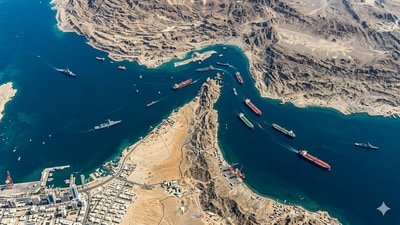
Iran has been linked to **transit-fee** talk in the Strait of Hormuz, but the market only resolves **Yes** if Tehran officially announces and begins collecting a general, mandatory charge from commercial vessels by the deadline. Public reporting in 2026 has mostly centred on Iran describing the idea as “navigational services” or environmental fees, while legal specialists and the International Maritime Organization have said there is no basis for a mandatory toll simply to pass through an international strait.[1][2][4][8][13]
The probability sits against a backdrop of repeated but uneven precedents: coastal states can charge for specific services actually rendered, yet not for mere passage, and that distinction is why headlines about “fees” have not automatically translated into a qualifying policy.[3][8][9] Reuters reported on 14 July that states bordering straits may impose limited service fees such as piloting, tugging, or port services, but not payments for transit itself, which is the key legal and factual line traders need to watch.[8] Recent commentary has also stressed that even if Iran frames a measure as environmental or security-related, a universally applied transit charge would still look materially different from an optional service tariff.[1][2][18]
For catalysts, watch for any formal decree from the Transport Ministry, Ports and Maritime Organisation, or other Iranian authority, plus whether the language specifies a general schedule, who must pay, and whether collection actually starts at ports or pilotage points. Traders should also monitor shipping notices, insurer advisories, and whether any claimed fee is tied to a defined service rather than access to the strait, because isolated demands would not meet the market rule. Accessibility-wise, German **GlüStV** can matter because some prediction markets are treated as gambling products under German law, while the **US CFTC** can still reach offshore event contracts if they are offered to US persons or otherwise touch US jurisdiction; “no-KYC up to $1,500” usually means a smaller account tier with lighter identity checks, which may make this specific market easier to access but does not alter the settlement standard.
Methodology
This overview of Iran charges Hormuz fees by 2026? reviews the four comparable platforms from a regulatory perspective: which is accessible in your jurisdiction, where KYC kicks in, how the platform is classified by your country of residence. Live probability is the Polymarket mid; comparison columns show regulatory status, KYC thresholds and settlement options for each platform.
Resolution & payout
On Polymarket, resolution runs on-chain via UMA Optimistic Oracle. USDC payout is instant and automatic, with no KYC. Tax treatment depends on your jurisdiction — in the US, gains are usually ordinary income; in the UK, often capital gains. Consult a tax professional for your situation.
FAQ
- Is Polymarket legal in my country?
- Polymarket is geo-blocked in the US/UK/EU. Actual usage via the Polymarket interface is not possible there. The legal status itself varies — many countries treat prediction markets as a gray area. Is Kalshi Legal in California has a different geo footprint.
- Do I need to KYC for Is Kalshi Legal in California?
- Not for lifetime trading volume under $1,500. Above that threshold, a quick KYC flow kicks in — ID, selfie, approximately 5-10 minutes. The threshold matches FATF travel standards for unregulated crypto platforms.
- How are winnings taxed?
- Tax treatment varies by jurisdiction. In most countries, prediction market gains are treated as ordinary income or capital gains. We cannot provide tax advice — consult a tax professional for your specific situation.
- What happens during a tax audit?
- You're responsible for documenting your trades. Is Kalshi Legal in California exports a full transaction history (CSV/PDF) for tax reporting. In an audit you'll need to present these documents.
- What if regulation changes?
- If regulation changes in your jurisdiction (e.g. prediction markets are banned), Is Kalshi Legal in California would geo-block the affected region and continue processing withdrawals. Your funds remain withdrawable at any time.
%22%2F%3E%3Cpath%20d%3D%22M%206%2066%20A%2026%2026%200%200%201%2058%2066%22%20fill%3D%22%23E6B98D%22%20opacity%3D%220.9%22%2F%3E%3Ccircle%20cx%3D%2232%22%20cy%3D%2226%22%20r%3D%2222%22%20fill%3D%22%23F5CBA7%22%2F%3E%3Crect%20x%3D%2214%22%20y%3D%224%22%20width%3D%2236%22%20height%3D%228%22%20rx%3D%224%22%20fill%3D%22%237c3aed%22%2F%3E%3C%2Fsvg%3E) and
and%22%2F%3E%3Cpath%20d%3D%22M%206%2066%20A%2026%2026%200%200%201%2058%2066%22%20fill%3D%22%23E6B98D%22%20opacity%3D%220.9%22%2F%3E%3Ccircle%20cx%3D%2232%22%20cy%3D%2226%22%20r%3D%2222%22%20fill%3D%22%23F5CBA7%22%2F%3E%3Crect%20x%3D%2210%22%20y%3D%224%22%20width%3D%2244%22%20height%3D%2214%22%20rx%3D%227%22%20fill%3D%22%237c3aed%22%20opacity%3D%220.9%22%2F%3E%3Crect%20x%3D%228%22%20%20y%3D%2218%22%20width%3D%228%22%20%20height%3D%2218%22%20rx%3D%224%22%20fill%3D%22%237c3aed%22%20opacity%3D%220.7%22%2F%3E%3Crect%20x%3D%2248%22%20y%3D%2218%22%20width%3D%228%22%20%20height%3D%2218%22%20rx%3D%224%22%20fill%3D%22%237c3aed%22%20opacity%3D%220.7%22%2F%3E%3C%2Fsvg%3E)
Trade Iran charges Hormuz fees by 2026? on Is Kalshi Legal in California
Live order book, 0% fees, USDC settlement in seconds.
Open live market →