Platform comparison
| Platform | YES odds | NO odds | Fee | KYC | Settlement | |
|---|---|---|---|---|---|---|
PolyGram Pick polygram.ink |
78% | 22% | 0% (USDC on-chain) | No-KYC up to $1,500 | USDC, auto via UMA oracle | Open on PolyGram → |
Polymarket polymarket.com |
78% | 22% | 0% | Geo-blocked in US/UK/EU | USDC, on-chain | Open on PolyGram → |
Kalshi kalshi.com |
— | — | Up to 7% per trade | US-only, KYC required | USD | Open on PolyGram → |
Betfair Exchange betfair.com |
— | — | 2-5% commission | Full KYC from first trade | GBP / EUR | Open on PolyGram → |
Manifold Markets manifold.markets |
— | — | Play-money (mana) | None — play-money | Mana (no cash-out) | Open on PolyGram → |
Live odds for Polymarket-based markets come from the Polygon order book. Non-Polymarket venues show attributes only; clicking any row opens the market on PolyGram.
Active sub-markets
Market context
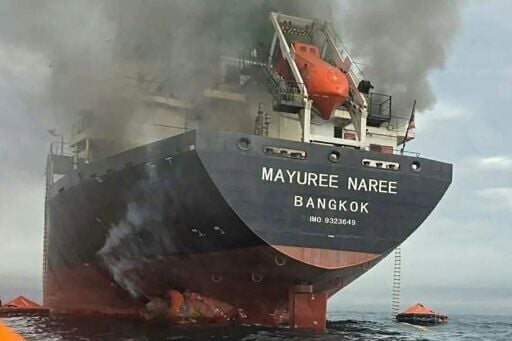
Iranian forces have already launched kinetic strikes against commercial vessels in the Strait of Hormuz, with the United States responding to alleged drone attacks on four ships, one of which was damaged. This escalation occurred shortly after a fragile ceasefire was signed, marking the first major test of that framework while Washington insists diplomacy remains paramount despite military retaliation[2][5]. The current 78% crowd-implied probability reflects a pattern where Iranian state-owned entities, including NITC tankers, have repeatedly breached the US-enforced naval blockade, transporting approximately five million barrels of crude oil into international waters[1][3].
Historical precedents show at least 17 non-Iranian merchant ships attacked by Iranian forces since March 2026, with 12 confirmed cases of damage ranging from minor to significant, though no vessels have been sunk to date[4]. These incidents align with a strategy of using drones and missiles to target commercial shipping, often claiming links to US or allied interests, which frames the high probability of a future seizure or strike before the July 2026 settlement window closes. Traders should monitor scheduled US-Iran ceasefire agreements, particularly the memorandum of union expected to allow Iran to sell oil, alongside any announcements regarding US Navy boarding operations or destructive fires pending final agreement execution[3]. Recent reports confirm Iranian-flagged vessels have successfully transited out of the Gulf of Oman, breaching the blockade line between 16 and 17 June, suggesting the blockade remains active but increasingly porous[3].
From a regulatory perspective, German GlüStV implications and US CFTC reach define the compliance boundaries for this market, while the 'no-KYC up to $1,500' threshold significantly enhances accessibility for retail participants without demanding extensive identity verification. This specific market's structure allows traders to engage with high-stakes geopolitical outcomes under a streamlined framework, provided they adhere to the jurisdictional limits imposed by Western regulators. The accessibility provided by the no-KYC limit means that a broader demographic can participate in betting on whether Iranian forces will seize a commercial ship, provided the action is explicitly claimed by the Islamic Republic or confirmed to originate from Iranian territory[1]. Proxy actions by Hezbollah or Houthis remain excluded from resolution, ensuring the market focuses strictly on state-level kinetic aggression.
Methodology
This page reviews Iran successfully targets shipping by 2026? across five venues. We show live odds for Polymarket-based markets (sourced from the Polygon order book); for other venues we list platform attributes, since the comparable contracts are not exposed via a public API on every venue. Every CTA points at PolyGram — the application we operate, where you trade directly against the Polymarket order book at 0% fees.
Resolution & payout
At resolution the UMA oracle takes over: a proposer posts the outcome with a bond, any token holder can dispute within two hours. Without dispute the result is accepted and the smart contract distributes USDC instantly.
On Kalshi (CFTC-regulated) resolution runs through their in-house clearing engine in USD. Betfair Exchange settles after match end in the account's local currency. Manifold pays no cash — only its in-platform "mana" currency.
FAQ
- Where can I trade this market with the lowest fees?
- On PolyGram, which mirrors the Polymarket order book at 0% fees. Kalshi charges up to 7% per trade; Betfair Exchange takes 2-5% commission on net winnings.
- Is this market available outside the US?
- PolyGram is available in most jurisdictions where Polymarket isn't directly accessible. Polymarket itself is geo-blocked in the US/UK/EU. Always check local regulations.
- What's the difference between YES and NO shares?
- A YES share pays $1.00 if the event happens, $0 otherwise. A NO share pays $1.00 if the event doesn't happen. The market price between 0¢ and 100¢ is the implied probability.
- What does it cost to trade on PolyGram?
- Zero. PolyGram routes every order to the live Polymarket order book; the only cost is the Polygon network fee, typically under $0.01 per transaction.
- How fast are USDC deposits?
- Polygon credits deposits after 12 confirmations — usually under 30 seconds. Withdrawals follow the same path and land back in your wallet within minutes.
%22%2F%3E%3Cpath%20d%3D%22M%206%2066%20A%2026%2026%200%200%201%2058%2066%22%20fill%3D%22%23E6B98D%22%20opacity%3D%220.9%22%2F%3E%3Ccircle%20cx%3D%2232%22%20cy%3D%2226%22%20r%3D%2222%22%20fill%3D%22%23F5CBA7%22%2F%3E%3Crect%20x%3D%2214%22%20y%3D%224%22%20width%3D%2236%22%20height%3D%228%22%20rx%3D%224%22%20fill%3D%22%237c3aed%22%2F%3E%3C%2Fsvg%3E) and
and%22%2F%3E%3Cpath%20d%3D%22M%206%2066%20A%2026%2026%200%200%201%2058%2066%22%20fill%3D%22%23E6B98D%22%20opacity%3D%220.9%22%2F%3E%3Ccircle%20cx%3D%2232%22%20cy%3D%2226%22%20r%3D%2222%22%20fill%3D%22%23F5CBA7%22%2F%3E%3Crect%20x%3D%2210%22%20y%3D%224%22%20width%3D%2244%22%20height%3D%2214%22%20rx%3D%227%22%20fill%3D%22%237c3aed%22%20opacity%3D%220.9%22%2F%3E%3Crect%20x%3D%228%22%20%20y%3D%2218%22%20width%3D%228%22%20%20height%3D%2218%22%20rx%3D%224%22%20fill%3D%22%237c3aed%22%20opacity%3D%220.7%22%2F%3E%3Crect%20x%3D%2248%22%20y%3D%2218%22%20width%3D%228%22%20%20height%3D%2218%22%20rx%3D%224%22%20fill%3D%22%237c3aed%22%20opacity%3D%220.7%22%2F%3E%3C%2Fsvg%3E)
Trade Iran successfully targets shipping by 2026? on PolyGram
Live order book, 0% fees, USDC settlement in seconds.
Trade on PolyGram →