Platform comparison
| Platform | YES odds | NO odds | Fee | KYC | Settlement | |
|---|---|---|---|---|---|---|
Polymarket (via Is Kalshi Legal in California) Pick polygram.ink (preferred broker) |
100% | 0% | 0% (USDC on-chain) | No-KYC up to $1,500 | USDC, auto via UMA oracle | Go to the live market → |
Polymarket (direct) polymarket.com |
100% | 0% | 0% | Geo-blocked in US/UK/EU | USDC, on-chain | Go to the live market → |
Kalshi kalshi.com |
— | — | Up to 7% per trade | US-only, KYC required | USD | Go to the live market → |
Betfair Exchange betfair.com |
— | — | 2-5% commission | Full KYC from first trade | GBP / EUR | Go to the live market → |
Manifold Markets manifold.markets |
— | — | Play-money (mana) | None — play-money | Mana (no cash-out) | Go to the live market → |
Outcome probabilities
Current market-implied probability for each outcome, from the live order book.
| Outcome | Probability |
|---|---|
| Miami Heat | 100% |
| Atlanta Hawks | 0% |
| Boston Celtics | 0% |
| Brooklyn Nets | 0% |
| Charlotte Hornets | 0% |
| Chicago Bulls | 0% |
| Cleveland Cavaliers | 0% |
| Dallas Mavericks | 0% |
| Denver Nuggets | 0% |
| Detroit Pistons | 0% |
| Golden State Warriors | 0% |
| Houston Rockets | 0% |
| Indiana Pacers | 0% |
| Los Angeles Clippers | 0% |
| Los Angeles Lakers | 0% |
| Memphis Grizzlies | 0% |
| Milwaukee Bucks | 0% |
| Minnesota Timberwolves | 0% |
| New Orleans Pelicans | 0% |
| New York Knicks | 0% |
| Oklahoma City Thunder | 0% |
| Orlando Magic | 0% |
| Philadelphia 76ers | 0% |
| Phoenix Suns | 0% |
| Portland Trail Blazers | 0% |
| Sacramento Kings | 0% |
| San Antonio Spurs | 0% |
| Toronto Raptors | 0% |
| Utah Jazz | 0% |
| Washington Wizards | 0% |
| Other | 0% |
Market context
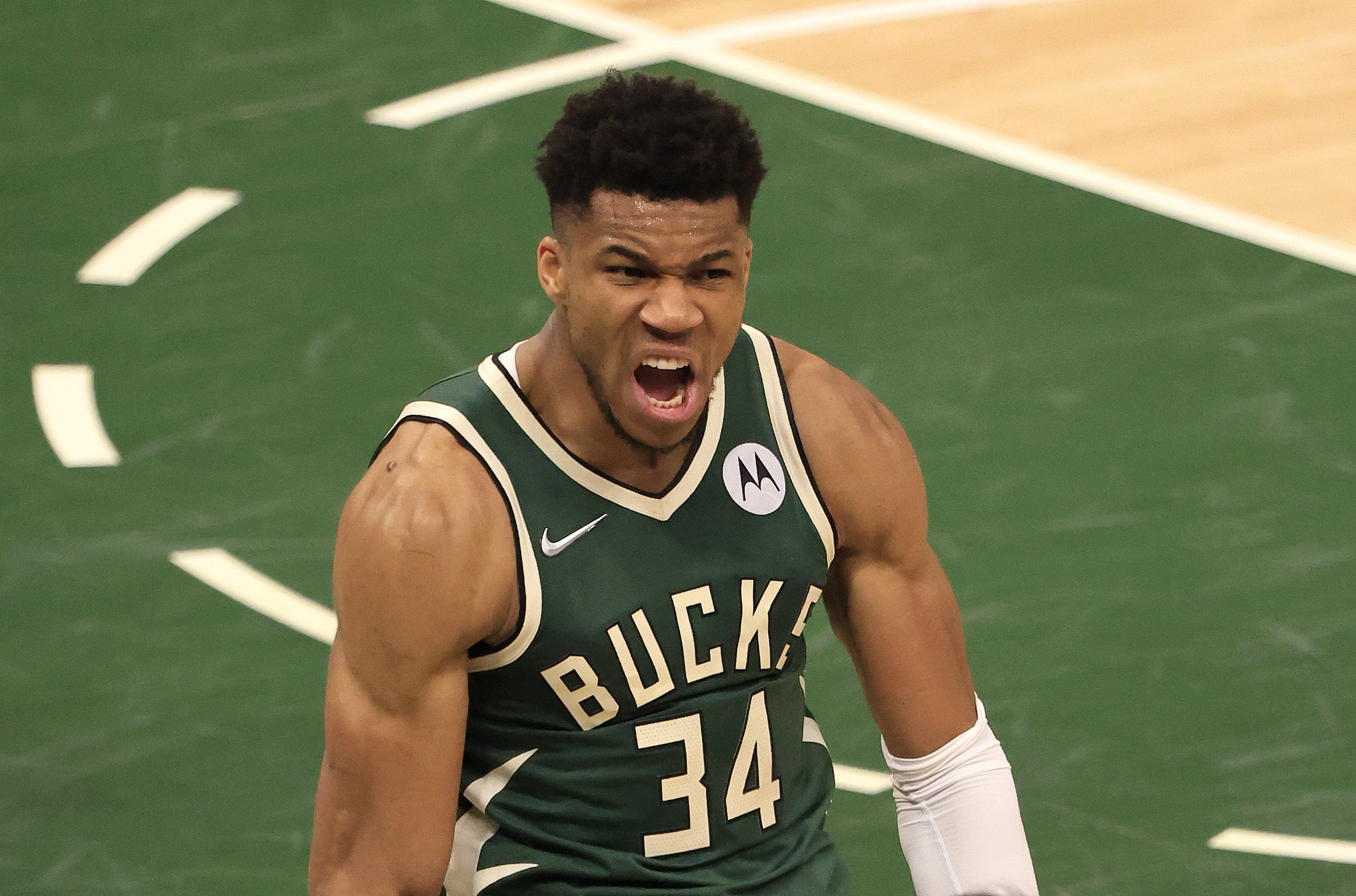
Giannis Antetokounmpo is contractually bound to the Milwaukee Bucks until at least the 2028–29 season, having agreed to a three-year, $186 million extension that starts with the 2025–26 campaign[1]. This long-term commitment explains the current 0% crowd-implied probability that he will officially join a new team before October 2026, as the market defaults to “Milwaukee Bucks” if no change occurs[1]. Historically, NBA superstars rarely depart mid-contract without massive financial incentives or mutual buyouts; comparable cases like LeBron James’s 2014 return to Cleveland involved pre-negotiated opt-outs, whereas Giannis’s deal includes a player option only for 2027–28, making an early exit highly improbable[1][3].
Traders should monitor the Bucks’ ownership stance, which has indicated a willingness to trade Giannis this offseason or offer an extension by October 1, though recent reports confirm they are keeping him through the current season[2][4]. Key catalysts include any official acquisition announcements before the market’s close date, which would immediately resolve the outcome, and the team’s financial flexibility, as Giannis’s contract affects trade packages and apron status[2][7]. The regulatory landscape adds nuance: German GlüStV implications and US CFTC reach mean that “no-KYC up to $1,500” enhances accessibility for this market, allowing broader participation without stringent identity verification, though this does not alter the underlying contractual reality[2].
The settlement window ending 2026–11–03 aligns with Giannis’s guaranteed contract years, reinforcing the likelihood of no team change[1]. If he retires or becomes uncontracted, the market resolves to “Other,” but his $58.4 million salary for the upcoming season suggests continued employment[2]. Recent news from June 2026 confirms trade rumors remain speculative, with no formal offers materialising[2]. The market’s structure, defaulting to “Milwaukee Bucks” or “Other,” reflects the high certainty of his current team affiliation, making the 0% probability a rational assessment of the contractual constraints[1][2].
Methodology
This overview of NBA: Giannis Antetokounmpo Next Team reviews the four comparable platforms from a regulatory perspective: which is accessible in your jurisdiction, where KYC kicks in, how the platform is classified by your country of residence. Live probability is the Polymarket mid; comparison columns show regulatory status, KYC thresholds and settlement options for each platform.
Resolution & payout
On Polymarket, resolution runs on-chain via UMA Optimistic Oracle. USDC payout is instant and automatic, with no KYC. Tax treatment depends on your jurisdiction — in the US, gains are usually ordinary income; in the UK, often capital gains. Consult a tax professional for your situation.
FAQ
- Do I need to KYC for Is Kalshi Legal in California?
- Not for lifetime trading volume under $1,500. Above that threshold, a quick KYC flow kicks in — ID, selfie, approximately 5-10 minutes. The threshold matches FATF travel standards for unregulated crypto platforms.
- Can I trade anonymously?
- Pseudonymously, yes — up to the KYC threshold. Is Kalshi Legal in California stores an email address and wallet addresses rather than a legal name. Over $1,500 lifetime volume triggers KYC, after which identity is no longer anonymous.
- What happens during a tax audit?
- You're responsible for documenting your trades. Is Kalshi Legal in California exports a full transaction history (CSV/PDF) for tax reporting. In an audit you'll need to present these documents.
- Are prediction markets gambling?
- Legally unclear in most jurisdictions. Some interpretations classify them as wagering (gambling regulation applies), others as derivatives (financial regulation applies). There's no global precedent specifically for on-chain prediction markets.
- Is there a withdrawal cap?
- No platform-side cap. You can withdraw any amount provided KYC is complete. SEPA bank withdrawals over €15,000 trigger additional anti-money-laundering checks (statutory obligation for all platforms).
%22%2F%3E%3Cpath%20d%3D%22M%206%2066%20A%2026%2026%200%200%201%2058%2066%22%20fill%3D%22%23E6B98D%22%20opacity%3D%220.9%22%2F%3E%3Ccircle%20cx%3D%2232%22%20cy%3D%2226%22%20r%3D%2222%22%20fill%3D%22%23F5CBA7%22%2F%3E%3Crect%20x%3D%2214%22%20y%3D%224%22%20width%3D%2236%22%20height%3D%228%22%20rx%3D%224%22%20fill%3D%22%237c3aed%22%2F%3E%3C%2Fsvg%3E) and
and%22%2F%3E%3Cpath%20d%3D%22M%206%2066%20A%2026%2026%200%200%201%2058%2066%22%20fill%3D%22%23E6B98D%22%20opacity%3D%220.9%22%2F%3E%3Ccircle%20cx%3D%2232%22%20cy%3D%2226%22%20r%3D%2222%22%20fill%3D%22%23F5CBA7%22%2F%3E%3Crect%20x%3D%2210%22%20y%3D%224%22%20width%3D%2244%22%20height%3D%2214%22%20rx%3D%227%22%20fill%3D%22%237c3aed%22%20opacity%3D%220.9%22%2F%3E%3Crect%20x%3D%228%22%20%20y%3D%2218%22%20width%3D%228%22%20%20height%3D%2218%22%20rx%3D%224%22%20fill%3D%22%237c3aed%22%20opacity%3D%220.7%22%2F%3E%3Crect%20x%3D%2248%22%20y%3D%2218%22%20width%3D%228%22%20%20height%3D%2218%22%20rx%3D%224%22%20fill%3D%22%237c3aed%22%20opacity%3D%220.7%22%2F%3E%3C%2Fsvg%3E)
Trade NBA: Giannis Antetokounmpo Next Team on Is Kalshi Legal in California
Live order book, 0% fees, USDC settlement in seconds.
Open live market →